
5 tips to improve your forehand
Improve your forehand by focusing on an early preparation, correct use of your non-dominant arm, and shifting your body weight forward. A full follow-through and catching the racket will enhance both your technique and control.
.avif)
-crop.avif)
5 tips to improve your forehand
1. Prepare your forehand early
The foundation of a good forehand is a quick preparation. If you spot the ball coming to your forehand early and immediately turn your body and position your racket to the side, you can focus more easily on other aspects, such as moving toward the ball and swinging cleanly through it.
When your preparation is late, you will often fail to hit the ball cleanly, and your stroke will feel rushed and erratic.
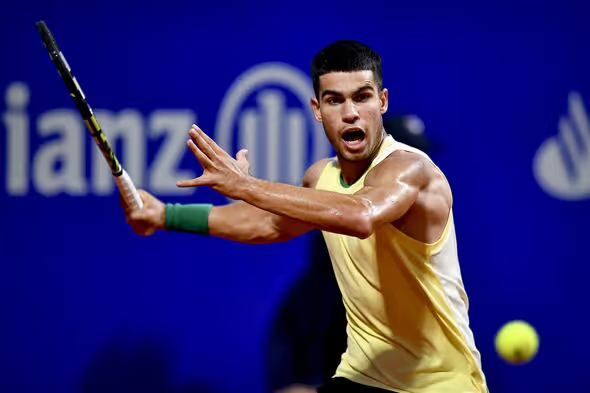
2. Use your non-dominant arm
Your non-dominant arm is crucial for your forehand. When you incorporate your non-dominant arm into your preparation, just like Alcaraz in the photo above, you will notice that your body automatically rotates more effectively.
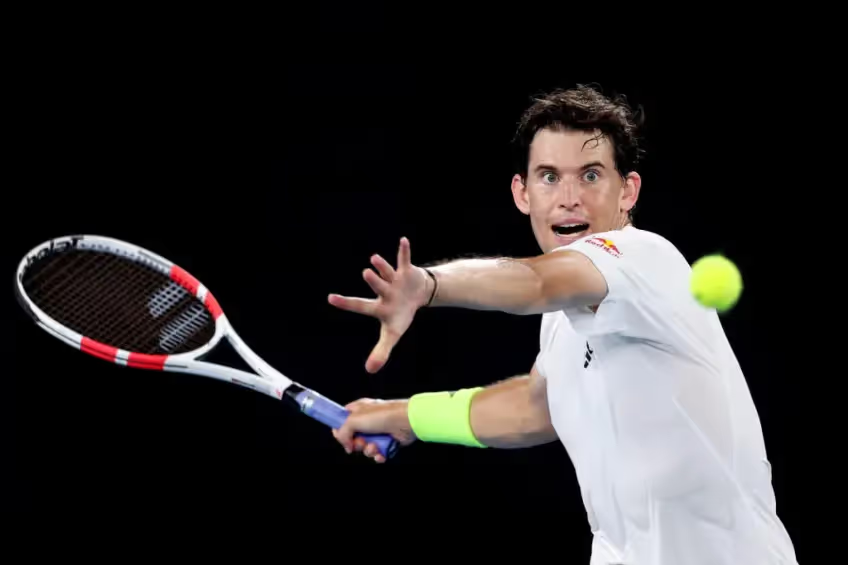
You may have heard that you should point your non-dominant arm toward the ball; many coaches give this advice to their students. However, this is not correct. It is better to point your non-dominant arm more to the side and pull it away in a fluid motion during your swing.
In the photo below, you can clearly see how Dominic Thiem keeps his non-dominant arm pointing to the side just before he makes contact with the ball. From there, he begins his swing and gradually pulls his arm away.
3. Keep your body weight moving forward
One of the most important things you can do to improve your forehand actually has nothing to do with the stroke itself, but rather with your footwork and upper body positioning.
If you notice that you often lean back, step backward, or lose your balance during your forehand, this tip will definitely help you.
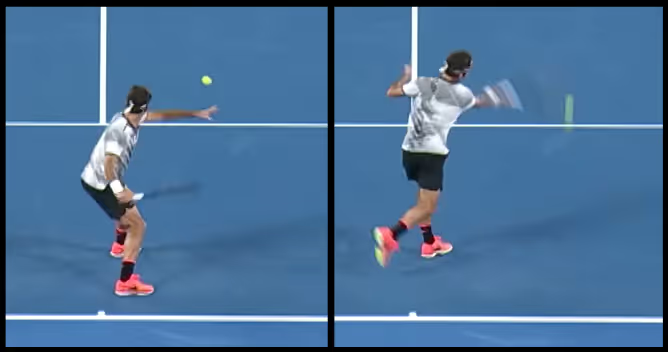
During your forehand, ensure that your body weight is always moving forward, or that you are even stepping through the ball entirely. This allows you to better utilize the momentum of the incoming ball, meaning you have to exert less effort to hit a quality return.
This saves energy and makes you more consistent. Just be careful not to step through the ball too early. Your back leg should only come forward just after you make contact with the ball. Otherwise, the motion won't be fluid and your timing will be off.
In the photo below, you can see how Roger Federer effectively uses his body weight. After he hits the ball, you can see his back foot lift off the ground as his body moves forward. Tips 1 and 2 are also clearly visible in the photo: Federer has prepared his forehand early, and his non-dominant arm is pointing to the side.
4. Catch your racket at the end of your swing
This tip is great for training sessions or when you're just hitting some balls with a friend. Catching your racket at the end of your swing will automatically improve your rotation. It will also help your swing path become more consistent.
I recommend only doing this during practice and casual play. You will eventually notice that your rotation and swing path improve in matches over time. Dominic Thiem is a player who does this in every practice session; if you watch him play rallies, you'll see he always catches his racket at the end of his swing.
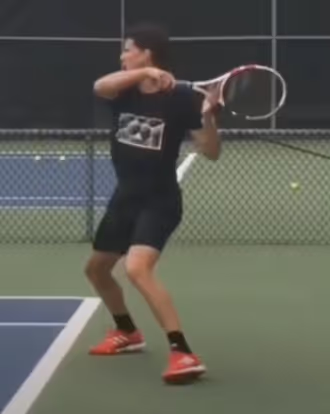
5. Swing long through the ball
If you don't follow through completely, pull your racket to the side too early, or swing upward too much, you will often graze the ball, making your forehand inaccurate and inconsistent.
So, always make sure to swing long through the ball. This helps you hit the ball cleaner and adds more depth to your shots.
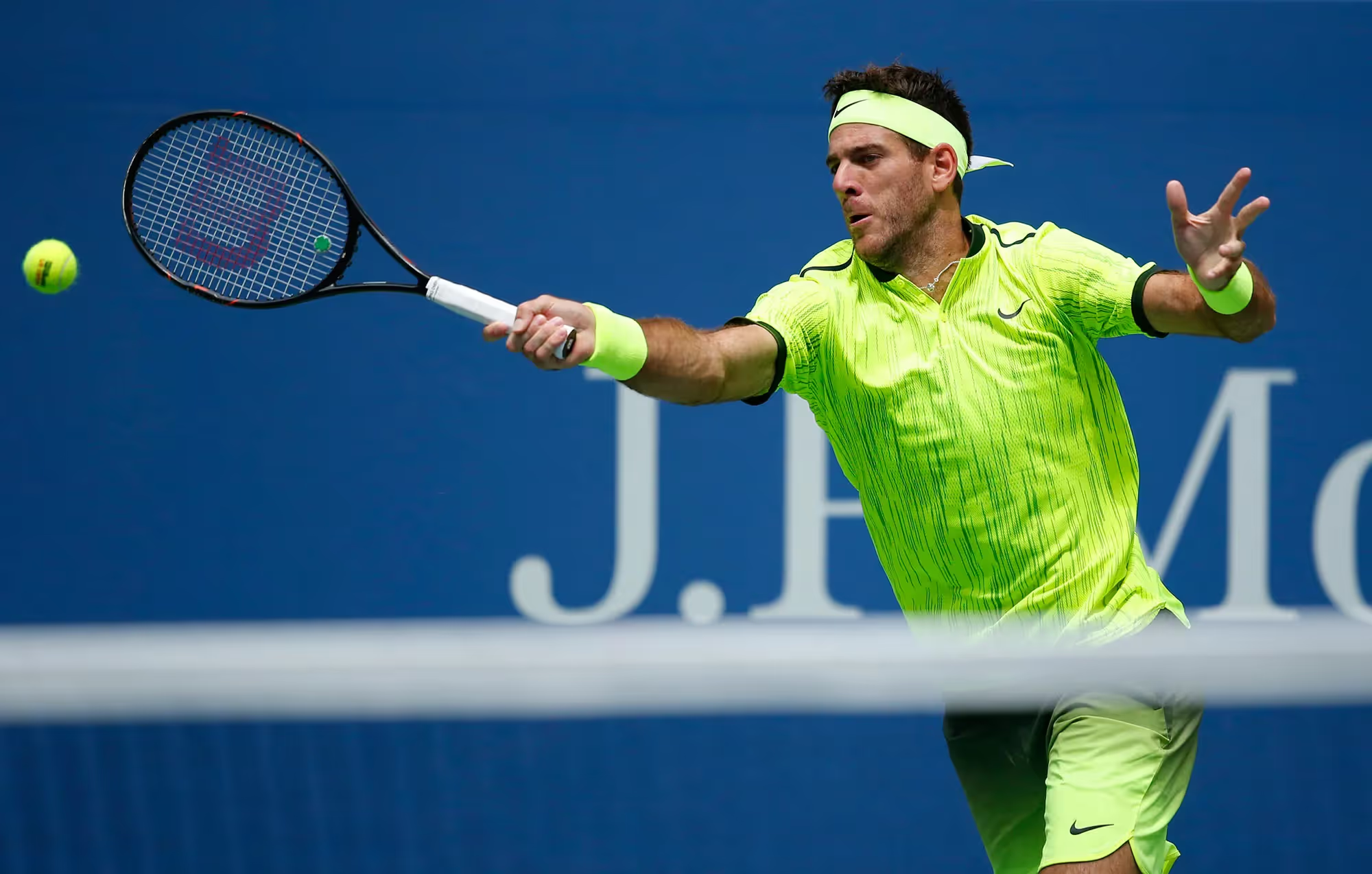
A tip to help you swing longer through the ball is to imagine that after hitting the actual ball, you need to hit an imaginary ball placed a few centimeters in front of it. This will make your swing extra long.
In the photo below, you can see how Del Potro extends his arm far forward after hitting the ball.
In summary:
- Preparation = rotate early and be ready.
- Non-hitting arm = helps with rotation and balance.
- Body weight = always forward.
- Catch the racket = for a good follow-through.
- Follow through = for control and depth.
Ready to train?
If you want to improve your forehand with these tips and others from a professional coach, you can!
Sign up for tennis lessons in your area via this link: https://simontennis.nl/locaties?inschrijven=true
Have fun on the court!
Start your sports adventure
To sign up for Simon's activities, visit the website and fill out the online registration form. Make sure to provide all required information and submit your application.
.avif)